
Department of Computer Science, Engineering, Mathematics, Physics, and Statistics (CEMPS)
Preparing Faithful Experts for Dynamic Careers
We are committed to providing a top-quality technical education in a supportive and collaborative community. APU is one of the nation’s few Christian liberal arts universities with an R2 designation from Carnegie, offering opportunities for undergraduate and graduate students to participate in impactful research, and our engineering program is accredited by ABET (Accreditation Board for Engineering and Technology) for its excellence in engineering education.
In our department, you will learn from excellent teachers who will guide you to discover what it means to be a STEM professional who serves God and loves others by using your technical skills to make the world better through education, engineering, math, computing, physics, or statistics.
Cultivating STEM Leaders through Research as an R2 Institution
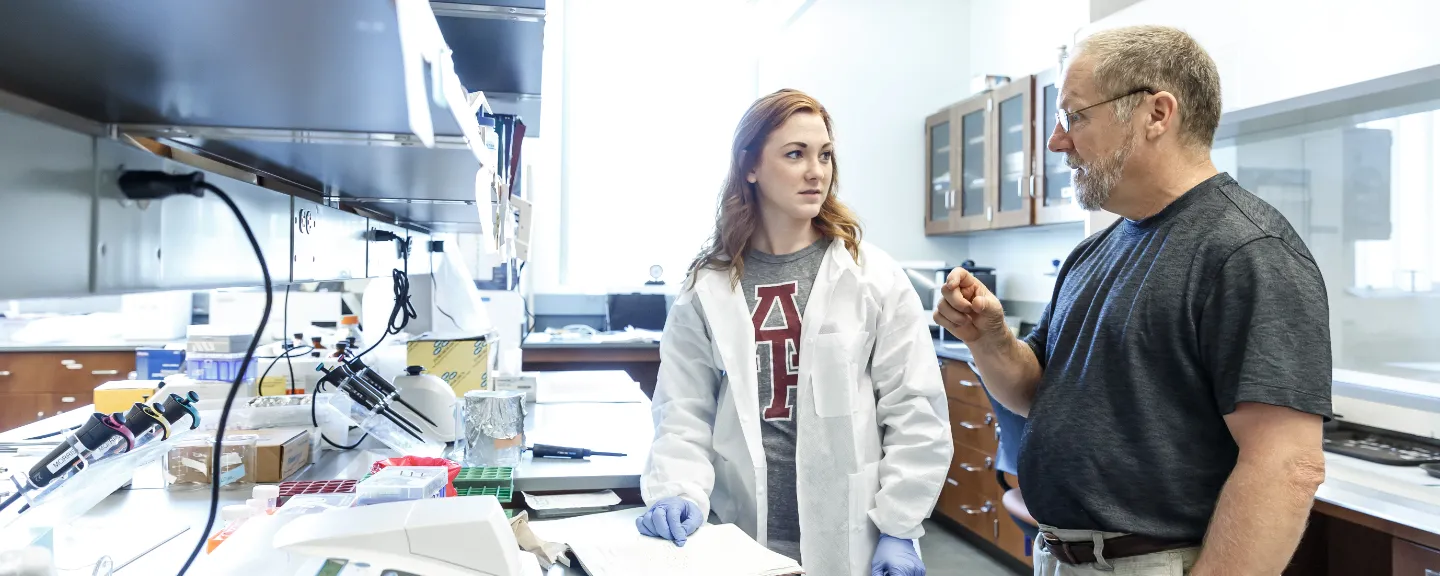
Azusa Pacific University recently announced a $2 million investment to purchase equipment which will enable faculty and students to conduct cutting edge research.

International Voices: Madey Sule ’27 Reflects the Love of God and Her Family in All Her Endeavors
Madey Sule ’27 has always been fascinated by the way mechanisms work. From cell phones to ceiling fans, she always wondered how the circuits caused such devices to function. Her curiosity, interest in improving day-to-day life, and yearning to answer God’s calling gave her the drive to leave her home in Nigeria for the first time in order to pursue an engineering degree at Azusa Pacific University.
Computer Science, Engineering, Math, Physics, and Statistics Resources
APU sets you up with a full spectrum of resources to support your academic pursuits. Though some are housed on the Azusa campus, many are accessible to all students.
APU provides a six-month subscription to ALEKS PPL (Assessment and Learning in Knowledge Spaces—Placement, Preparation, Learning) to all new students who need to take a math course, whether to satisfy the general education quantitative literacy requirement or to meet a major or minor requirement.
ALEKS assesses your current skill level, tailors an adaptive online learning experience to your personal strengths and weaknesses, and then allows you to take the assessment again (up to three times, if you desire) in order to determine the best math course placement for you.
Students should take their initial ALEKS assessment as soon as possible at a time and place of their choosing. To find out whether you are required to use ALEKS and how it works, visit the APU Math Placement Assessment website.
Note: This information is current for the 2024-25 academic year; however, all stated academic information is subject to change. Refer to the current Academic Catalog for more information.

$200,000 NSF Grant Supports Students STEM Identity through Learning Assistant Program
The university recently received a $199,996 grant from the National Science Foundation (NSF) to study the effectiveness of learning assistants in the classroom and the experiences of historically underrepresented students in STEM, while providing funding for an additional 10 learning assistants per semester over the next two years.
Meet Your Faculty Mentors
In each program, faculty bring years of research and industry experience to the classroom, guiding their students to become difference makers in STEM.
Contact Information
Email (Graduate Programs): [email protected]Email (Undergraduate Programs): [email protected]
Phone: (626) 815-5310
Hours
Monday–Friday, 8:30 a.m.-5 p.m.
Location
Segerstrom Science Center, Room 100