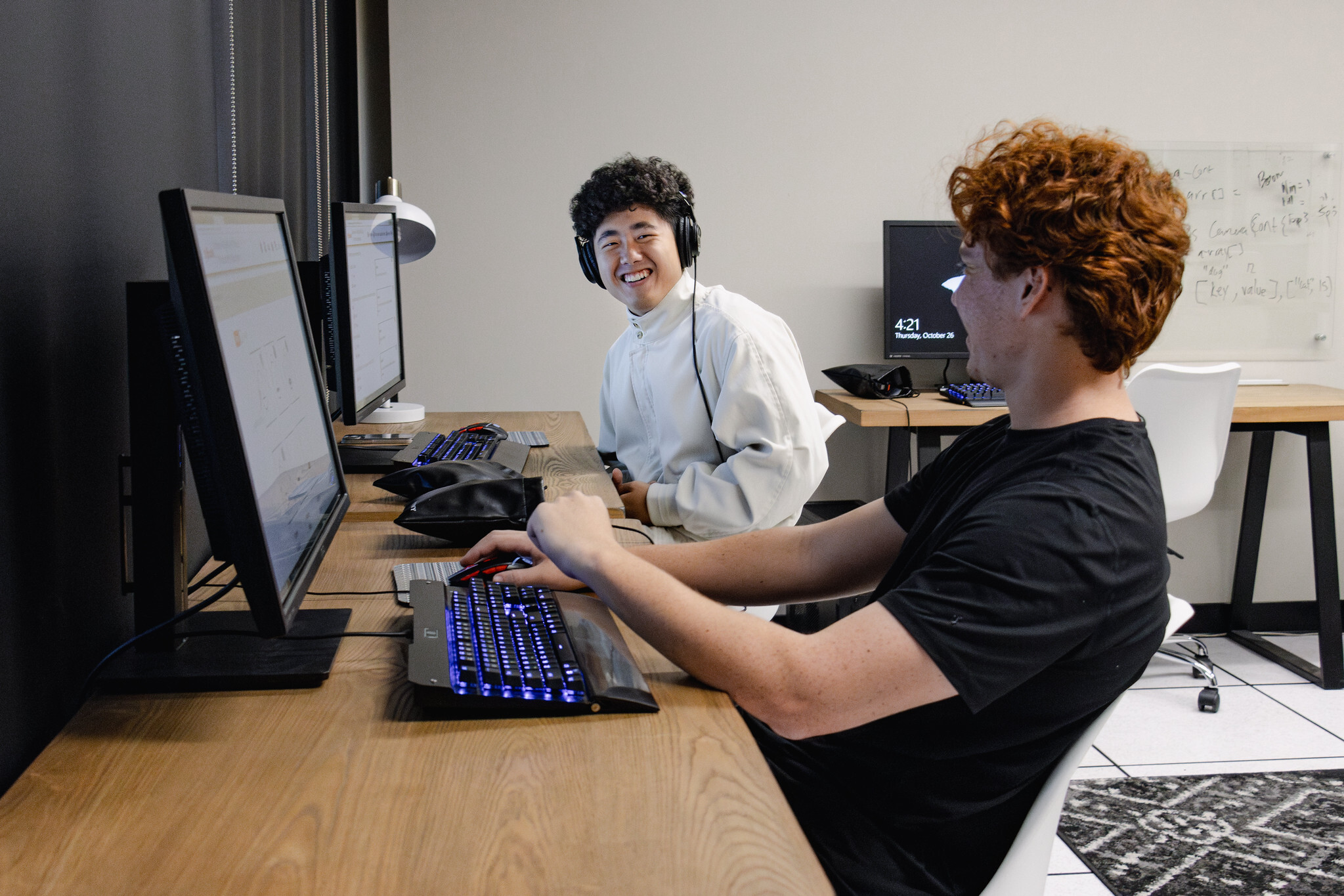
At Azusa Pacific University, the Bachelor's in Computer Science (CS) degree prepares students for careers in software development, data analysis, and systems programming, while centering on a faith-filled experience. Students are taught programming, algorithms, and how to handle artificial intelligence, all while solving complex problems in this digital age.
-
Azusa Pacific University offers a Bachelor of Science in Computer Science that equips students to become Inspiring Forward Thinkers who solve real-world tech problems.
-
The program is rooted in the university’s God First motto, deeply integrating Christian faith and ethical reasoning into software development and data analysis.
-
Students experience a Life-giving Community through faculty mentorship and hands-on senior projects, ensuring their technical skills are utilized for Sacrificial Service.
Integrating Faith and Technology in Computer Science
The CS degree at APU is built on the foundation that faith and academics are not separate.
Bradley “Peanut” McCoy, PhD, chair and professor in the Department of Computer Science, Engineering, Math, Physics, and Statistics, emphasizes a supportive environment where faculty and students actively learn and
grow alongside one another. “Faith is a key part of everything we do,” said McCoy.
An integration of faith allows students to think about the work they will be contributing
to society. A faith-based foundation also teaches students to consider ethical reasoning
in their future jobs.
Ethical Reasoning and Community Impact
Ethical reasoning as a basis for education allows students to see technology as a tool to serve the community around them. As a CS major, Pitzil Avila-Castellanos ’28 is excited to be part of a supportive and innovative program. “I wanted to learn how to apply my technical skill set with a faith-based mindset,” said Avila-Castellanos. The combination of faith and education continues to shape how she thinks about her long-term career.
Mentorship and Hands-On Learning at Azusa Pacific University
Students appreciate the accessibility and mentorship given to them as they journey through their four years in CS. “The professors are very accessible,” said Avila-Castellanos. “We can email them or stop by their office hours to get all our questions answered.” That accessibility extends beyond academics into personal development and career guidance. Along with the support the professors provide, students are encouraged to work together. “We are a collaborative culture, where we really hope that faculty and students are all helping each other learn all the time,” said McCoy. The result is a learning community where students often form close relationships and support networks that extend beyond the classroom.
Through both on-campus and off-campus internships, students are able to take what they have learned at APU and apply it to the real world. “We’re creating software where students in rural Uganda can build resumes without power or internet access,” said Avila-Castellanos, who has been able to use her faith-based education to serve the world with her skills. Additionally, alumni like Nicholas Chera ’18 say that APU's CS program helped him fall in love with coding. “It’s a lot easier to learn when you understand why what you’re learning is valuable,” said Chera. “There’s no place where you might not be able to bring benefit to people’s lives through applying computer science skills.” This mindset allows both undergraduate students and alumni to seek the purpose behind their work.
Real-World Experience and Senior Projects
Hands-on learning is a big part of APU's CS program. Inspired by a YouTube video he watched, Chera described a moment when he was able to collaborate with faculty to advance his skills. “We received funding to obtain all of the hardware components and build an eight-bit computer from scratch,” said Chera. Moments like these are why APU's CS program is so valuable. It allows students to explore real-world problems and helps them find solutions to them themselves. Additionally, students are given the opportunity to experience career-like work during their senior year. “Seniors complete a project that lasts the entire year where they’re working with a team in much the way that a professional software developer would,” said McCoy. This hands-on approach is supported through internships, research, and access to on-campus resources.
Ultimately, the APU CS program is not just about training on how to code. It provides students with a reason to learn and the capacity to make a difference in the lives of others. APU promotes faith-based education, mentoring, and collaborative learning so students are well-equipped to engage with the world of technology professionally and with a servant heart. Students are trained not only to succeed in the field but to make an impact with their skills in the world around them.
Apply to APU, California’s Top Ranked Christian University
Frequently Asked Questions (FAQ)
The Computer Science degree at APU is built on the foundation that faith and academics are interconnected. Students learn ethical reasoning and view technology as a tool to serve their community with a God First mindset.
Students engage in hands-on learning through internships, research, and a year-long senior project where they work collaboratively with a team, mirroring the environment of professional software developers.
Bradley McCoy, PhD, serves as the chair and professor in the Department of Computer Science, Engineering, Math, Physics, and Statistics at APU.