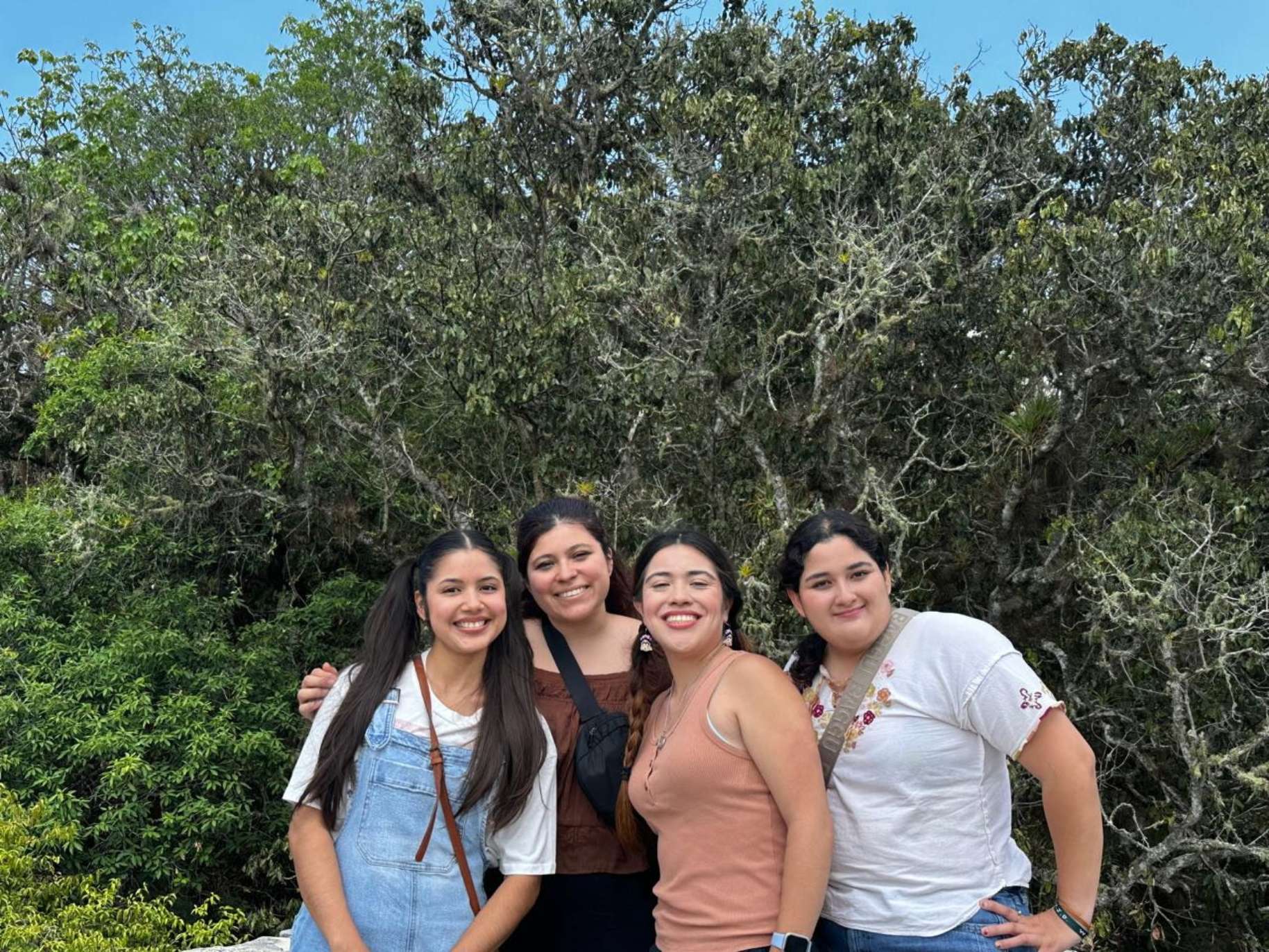
Each summer, Azusa Pacific University students have the opportunity to serve around the world and immerse themselves in new cultures through Global Engagement (GE) trips. Nicole Segura ’27, a kinesiology major with an honors humanities minor, served on the Chiapas GE team. The team spent 17 days participating in youth ministry, and while Segura went into the trip hoping to help people, she was pleasantly surprised by all that the children and locals in Chiapas had to teach her about slowing down and living life joyously.
Segura felt called to go on her first GE trip, and she was initially nervous about choosing where to go. After talking with one of the Chiapas team’s co-leads, she felt like it would be a good place to start. Segura is Mexican and speaks Spanish, so communicating with the children wouldn’t be a problem, and she expected to be familiar with some of the cultural aspects, but it would also provide new experiences since she’d never been to Chiapas before.
The team focused on serving through youth ministry at an orphanage. The orphanage also included classrooms which Segura and the team were tasked with decorating in grade appropriate ways that would help the children learn English. “The biggest challenge was that there was no set plan for each day,” she said. “We could be helpful by doing different tasks, but it’s challenging to work with kids while they’re in school without inserting ourselves into their routines.” Where the team was really able to make a difference was after school when they could interact with the kids and be a comforting, accessible presence. In the afternoons, Segura and the team played with children and got the chance to connect with them through meaningful conversations. During their final week there, the team was able to go into the classrooms and help teach the kids English.
Some students go on GE trips expecting to share the Word with people who are unfamiliar with Christianity, but in Chiapas, faith was already part of the culture. Each night, children at the orphanage would read the Bible and say prayers together. “It was beautiful to see how faith is implemented into their culture so that there’s no gap,” Segura said. “The kids’ favorite part of the day was singing, dancing, and worshipping each night, and you could even hear them singing in the halls during the day. Sitting down with the Bible was part of their daily routine, but where I saw their faith was in them singing through the day and praying before meals.”
Segura loved how the children incorporated their faith into every aspect of their days, which she found was a part of the larger community as well. “This trip taught me what childlike faith looks like,” she said. “It’s easy to focus on what brings us joy or satisfaction based on what we have and our circumstances, but these children have so many challenges and you would never know because of their love, joy, and constant smiles.” In Chiapas, worship wasn’t just volunteering, singing a song, or listening to a sermon. Faith was living in a way that ties joy back to God by being in community with others. “Some of the people in Chiapas may live in poverty, but they see themselves as rich because they are such a tight community, which is all they need.”
During her time in Chiapas, Segura often experienced positive culture shock. She was constantly learning new things and seeing different ways to express her faith through connection and joy. “I would describe Chiapas as vibrant—not just the colors and music, but the people as well,” Segura said. She plans to bring that vibrancy and love for life back to APU for her senior year.
Between moments of joy and gratitude, Segura and her team also faced challenging moments that brought them closer together. One day, Segura was feeling physically and emotionally tired and homesick. When she brought this up to her team, they validated her feelings and helped ground her in their shared purpose. “They reminded me that I need to take care of myself, but that at that moment my job was to be the hands and feet of God,” she said. “They helped me to find strength in Him, and our devotionals, where we sat down to read the Bible together before starting each day, grounded me in the right ways.”
Segura found joy in playing with children at the orphanage, learning about the local culture, and bonding with her teammates. Finding joy in the small moments and being grateful for time with friends became themes of her time in Chiapas that she will carry back with her to APU. Segura believes that while service should be done without wanting anything in return, her time in Chiapas showed her how service can also be personally rewarding. “Just sitting with someone and listening to their story is a form of service,” she said. “When you’re listening, they may say something that makes you feel good or learn something new, and you may realize that you wouldn’t have heard that if you hadn’t taken the time to listen, and that’s really rewarding.”