
Allied Health Majors
Become a healthcare leader through customizable degree paths and transformative clinical experience in Azusa Pacific University’s allied health program.
Why Earn Your Allied Health Degree at APU?
Discover where purpose meets preparation in APU’s allied health major. Designed for those called to serve in the healthcare field, our undergraduate allied health program builds clinical expertise and discernment. It provides a strong foundation for graduate study or professional practice.
- A unique allied health degree with a business emphasis or pathways to physical therapy and teaching.
- Hands-on lab experience and cadaver-based learning to gain a comprehensive understanding of human anatomy.
- An intensive, interdisciplinary curriculum that deepens your understanding of biology, chemistry, physiology, and more.
- An exploration of ethical decision making through a Christian lens that informs your future healthcare career.
- Faculty mentorship that transforms your intellectual and spiritual growth.
Program at a Glance
Upcoming Events
- Saturday, October 24, 2026
- Friday, November 6, 2026
- Saturday, November 14, 2026
Application Deadline
Apply anytime! We accept and review applications on an ongoing basis and fill seats as they open each term.
Program Information
- Program Units: 64-97
Location
- Azusa (Main Campus)

What You’ll Learn
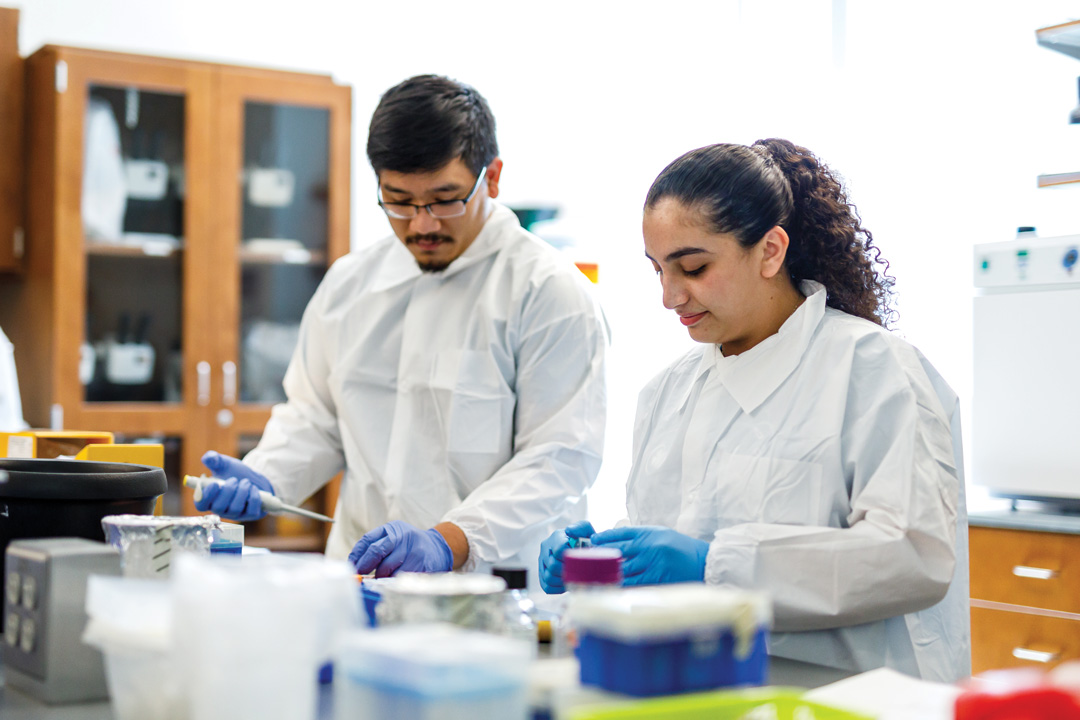
Across APU’s allied health degree tracks, our curricula emphasize comprehensive science-focused training, experiential learning, and practical skill development—all through a Christian worldview.
As an allied health major, you’ll gain
- a working knowledge of human anatomy, physiology, and biological systems as they relate to health and disease;
- lab skills and analytical techniques used in healthcare and life science settings;
- fluency in scientific and clinical terminology, so you can effectively communicate in academic and professional environments;
- insight into human development, behavior, and psychosocial factors that influence health and wellness; and
- real-world experience applying scientific concepts through practicums, internships, research, or service-based learning opportunities.
Get Started
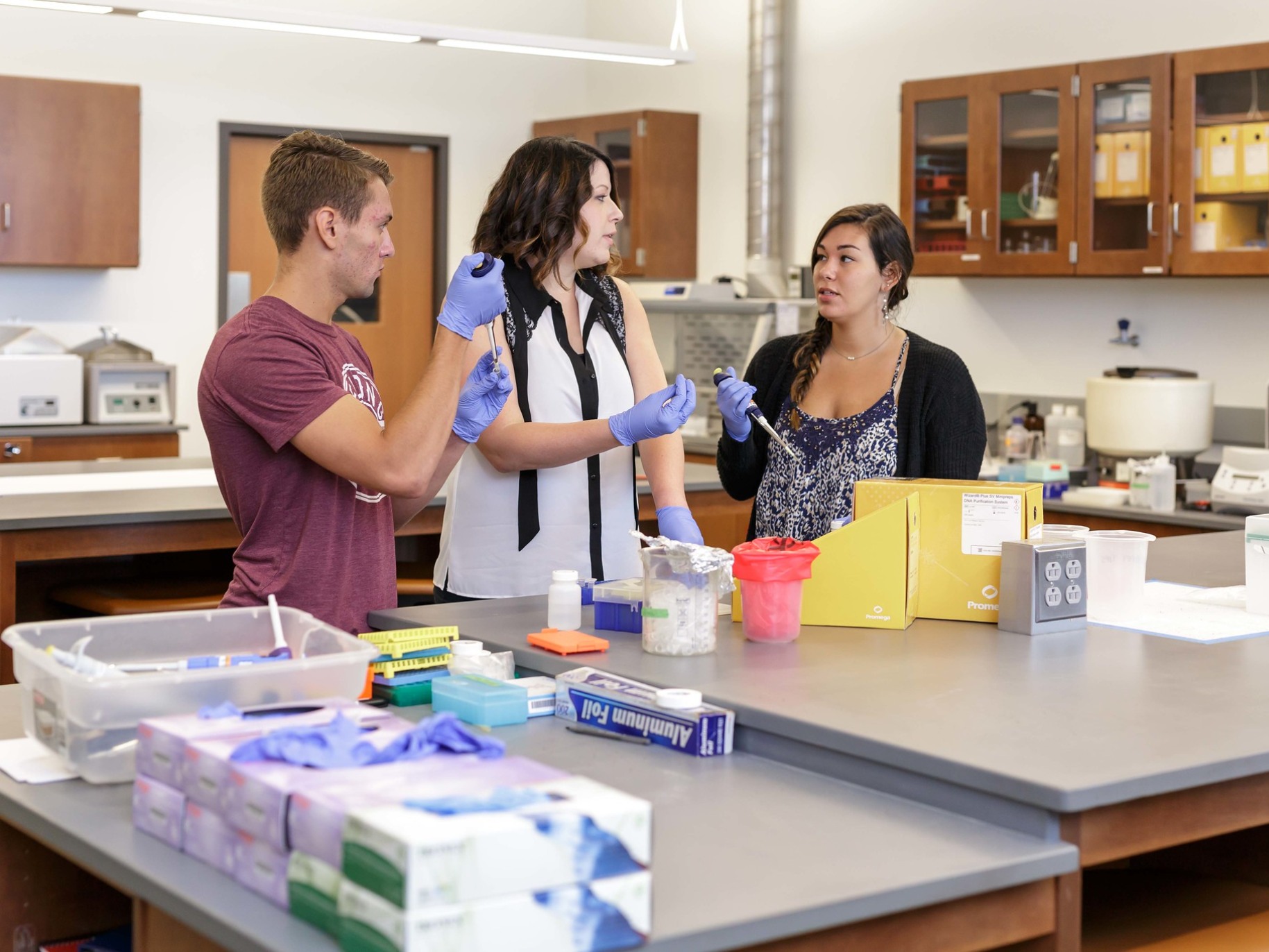
Allied Health Students Are Building Community Through Mentorship, Hands-on Learning, and Faith Integration
APU’s allied health program prepares students for careers that change lives, as collaborative community, devoted faculty mentors, and hands-on experiences like cadaver study equip them to treat every patient with dignity.
Program Details
Tailor your undergraduate education to your academic interests and career goals by majoring in allied health. Your intensive coursework, lab and clinical experiences, and extracurricular opportunities diversify and strengthen your skill set, empowering you to provide technical, therapeutic, and support services in the healthcare field.
Learn more about pathway options, admission information, and tuition and scholarship opportunities below.
The Bachelor of Arts in Allied Health gives you a solid interdisciplinary foundation for people-centered healthcare careers. Our 66-credit curriculum blends coursework in the biological, chemical, and physical sciences with studies in psychology, kinesiology, statistics, and applied electives, allowing you to shape your learning around your professional goals. If you’re interested in pursuing graduate study in nursing, nutrition and dietetics, radiation technology, or other health fields, this program prepares you for success.
The 66-unit BA in Allied Health with Business Emphasis prepares you to serve at the intersection of science, leadership, and organizational impact. Build a strong foundation in health sciences while developing business knowledge that supports work in healthcare administration, public agencies, and regulated industries. This interdisciplinary program positions you for roles with healthcare systems, pharmaceutical and biotechnology organizations, public health departments, and agencies such as the Environmental Protection Agency and the Food and Drug Administration.
Review the degree requirements for the BA in Allied Health with Business Emphasis.
Ready to become a physical therapist? APU’s Bachelor of Arts in Allied Health/Doctor of Physical Therapy (DPT) Accelerated Pathway helps you expedite your academic and professional development journey. Through this pathway, you complete 75 units of undergraduate coursework while meeting the requirements for entry into APU’s DPT program at an accelerated pace. During the spring semester of your final undergraduate year, you begin DPT classes, seamlessly transitioning from one program to another.
Review the degree requirements for the BA in Allied Health/DPT Accelerated Pathway.
The Bachelor of Science in Allied Health offers an in-depth, science-focused curriculum for students pursuing advanced healthcare endeavors. With extensive coursework in biology, chemistry, physics, and statistics, this 64-unit program emphasizes analytical problem-solving, lab experience, and scientific inquiry—all grounded in a Christian worldview.
Step into your calling as an educator by earning a Bachelor of Science in Allied Health with an Integrated Single Subject (Science) Teaching Credential. Offered through the Department of Biology and Chemistry and the Department of Teacher Education, this 97-unit pathway equips you with a robust scientific foundation and the pedagogical expertise to inspire students and make a meaningful impact in middle or high school classrooms.
Our easy undergraduate admissions process helps you take the next step toward a purpose-filled education.
The prerequisites and required next steps for applying to APU vary depending on your student type. Select your enrollment path for more detailed admissions information:
Have questions along the way? Connect with our dedicated admissions representatives to get the support you need.
Requirements for Allied Health Majors
While the Department of Biology and Chemistry does not limit enrollment in these majors, you must demonstrate certain levels of academic achievement to enter and remain in these majors.
Freshman Applicants
To qualify for a major in allied health, freshman applicants must submit documentation of the following (or their equivalents) and indicate their choice for one of those majors to the Office of Undergraduate Admissions before the start of classes. After that date, the requirements in the Matriculated APU Students section below must be met.
Prerequisites include:
- High school GPA of 3.0+
- At least three years of high school math (an average of C- or better across all three years) or SAT Math score of 530+ or ACT Math score of 21+
- At least two years of high school science (with a B or better in either biology or chemistry)
Transfer Applicants
Transfer applicants applying to our allied health program must submit documentation of the following (or their equivalents) and indicate their choice for one of these majors to the Office of Undergraduate Admissions before the start of classes. After that date, the requirements in the Matriculated APU Students section below must be met.
Prerequisites include:
- Community college/university GPA of 2.8+
- Completion of Intermediate Algebra or higher (C- or better)
- Completion of a one-semester science course (C- or better, biology or chemistry course recommended)
Matriculated APU Students
To gain admission into the allied health major, matriculating APU students must submit evidence of all of these:
- Completion of BIOL 151 or CHEM 151 (C- or higher)
- Completion of MATH 95, current ALEKS score of 45+, SAT Math score of 530+, or ACT Math score of 21+
- Completion of prospective major advising in the Department of Biology and Chemistry
Department Policies
These policies apply to all students enrolled in courses offered by the department:
- You must complete all required prerequisites for BIOC, BIOL, or CHEM courses with a grade of C- or higher before enrolling, unless otherwise noted in the course description.
- You may attempt any single BIOC, BIOL, or CHEM course no more than two times at APU.
- If you earn below a C- in any three BIOC, BIOL, or CHEM courses, you will be automatically removed from future enrollment in department courses.
- If you are majoring in allied health or biochemistry, you are not eligible to earn a biology minor.
- Missing more than three lab sessions in a course will result in an automatic failing grade.
- BIOC, BIOL, or CHEM courses completed online or through correspondence are not eligible for transfer credit if they include a lab component.
Additional Requirements for Allied Health Majors
All allied health majors must meet these requirements. Failure to do so will result in a student being dropped from the major. Reentry to the major is by petition only.
- A minimum cumulative GPA of 2.0 in all biological sciences, chemistry, biochemistry, math, and physics courses required for the major must be maintained.
- A student must complete each BIOC, BIOL, or CHEM course with a C- or higher for the course to meet a degree requirement in the Department of Biology and Chemistry.
- Any single class within the major can be taken only twice at APU. Students must change to a major outside the department after two unsuccessful (below C-) attempts in a single required course.
- Only two courses total within the major can be repeated. Students must change to a major outside the department after unsuccessful (below C-) attempts in any three required courses.
- All majors are required to take BIOL 496 to meet their general education Senior Seminar or Writing 3 requirement.
- While courses required for the major may be taken at other accredited institutions, subject to approval via a transfer inquiry form, lecture and laboratory components must be taken at the same institution in the same semester.
- It is strongly recommended that freshmen in all biological sciences majors (including biochemistry) take General Chemistry I (CHEM 151) and General Biology I (BIOL 151) the first year, and that chemistry majors start with General Chemistry I (CHEM 151) and Calculus I (MATH 165) the first year. Should the math placement assessment require algebra for the student, that class should be taken in the first year, and a five-year program may be indicated.
- BIOL 151 should be taken by allied health, biochemistry, and biological sciences majors who receive AP biology credit. Many medical schools and graduate programs do not accept AP Biology to meet admission requirements. AP credit for BIOL 151 will be given only with the approval of the chair of the Department of Biology and Chemistry.
- Students may take a maximum of 3 units total from BIOL 390, BIOL 391, BIOL 490, BIOL 497, and BIOL 498 for elective credit toward the BS in Allied Health or the BS in Biological Sciences.
These courses may not be taken to meet upper-division elective requirements in any major in the department:
Achieve more at Azusa Pacific University. For decades, we’ve stayed dedicated to making Christian education affordable. That’s why we provide a comprehensive range of financial aid options, including federal loans, state grants, fellowships, and scholarships.
For more information, contact the Student Services Center at (626) 815-2020.
Scholarships and Grants
Scholarships and grants are considered gift aid, meaning they do not require repayment. These awards may come from federal, state, institutional, or private sources. Scholarships are often merit-based and awarded for academic achievement, leadership, or other demonstrated talents.
While APU does award scholarships, you can also find external scholarship opportunities through websites such as Finaid and Fastweb. Contact the Student Services Center about scholarships offered through APU departments or local organizations.
Student Employment
Along with gift aid and student loans, you can apply for on-campus student employment opportunities to earn additional income to pay for education-related expenses. As an APU student, you can also find work off campus in the surrounding community.
Military and Veterans Benefits
If you are a veteran, serve in the military, or qualify as a spouse or dependent, you may access financial assistance that helps cover the cost of tuition, housing, and books. As a Yellow Ribbon and Military Friendly School, APU offers the support and flexibility needed to help you complete your bachelor’s degree.
Net Price Calculator
We’re committed to helping you understand the value of the APU experience early in the college search process. Once you’ve explored the financial aid opportunities available, take the next step by estimating your cost to attend. The Net Price Calculator provides a personalized estimate based on the information you share, so you can start planning today!
At APU, we’re committed to delivering the highest quality education, backed by respected accreditation and academic excellence. Azusa Pacific University is accredited by the WASC Senior College and University Commission (WSCUC).
By the Numbers
Outlook and Outcomes for Allied Health Majors
As healthcare needs continue to grow, highly skilled allied health professionals are essential to delivering high-quality care, innovating evidence-based practice, and investing in the health and well-being of diverse communities.
From becoming a cytotechnologist to jump-starting your career in occupational therapy, earning a BA or BS in Allied Health prepares you with the scientific foundation, hands-on experience, and ethical perspective to pursue a wide range of professional pathways that offer steady employment and good salary potential.
Department of Biology and Chemistry Faculty
At APU, you’re surrounded by faculty mentors ready to inspire, encourage, and invest in you. With their in-depth scientific expertise, your professors set high academic standards and equip you with the skills needed for your future professional endeavors.

Ryan Somers
Assistant Professor, Department of Biology and Chemistry

Marian Saleh
Assistant Professor, Department of Biology and Chemistry
Envision Your Success at APU
Ready to take the next step toward a career rooted in service and scientific exploration? Earning a BA or BS in Allied Health at Azusa Pacific University equips you for graduate study and professional success through transformative hands-on learning and a Christ-centered approach to health sciences.